Wren Longwood
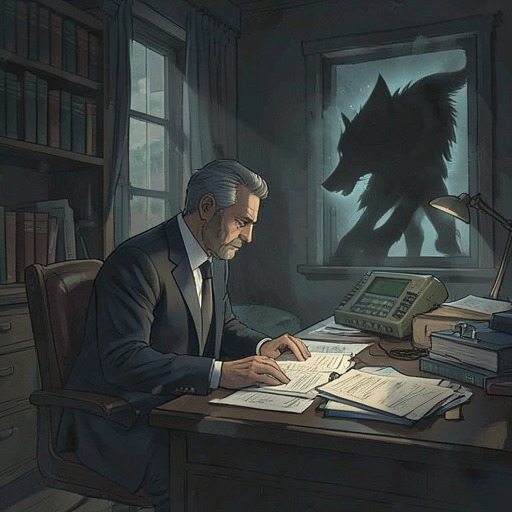
The Werewolf Mates Anthology (Erotic Romance)Wren Longwood is a criminal attorney, a recently transformed werewolf, and the estranged daughter of the powerful Longwood family of Manhattan. Her decisive significance lies in the way she converts imposed exile into chosen independence: after her family rejects her as a danger and later attempts to reclaim her for its own purposes, Wren remains in Boise, accepts the reality of her bond with Andy Olson, and begins defining herself outside the expectations that governed her first thirty-three years.
Identity and Background
Wren’s public identity is shaped by two competing worlds. She comes from New York, where the Longwoods have lived for more than two hundred years, and carries the family’s money, polish, and strict code into Boise. At Olson and Breyer, Attorneys at Law, she is conspicuously elegant without treating Boise as inferior. Andy Olson sees the New York background in her bearing, yet also recognizes the discipline required for her to work without displaying contempt for the slower city and its different culture.
Her private life is less settled. She left New York after a dog attacked her during a run through Central Park a year earlier. The attack was never explained or resolved: neither the police nor animal control found the animal. Wren then became gravely ill, spending two days in a private hospital suite in a near-comatose state. A week later she was apparently recovered, but with heightened abilities. She could run faster, see farther, and hear better than she remembered. The first full moon transformed those bodily changes into a social and existential crisis, revealing that the attack had infected her with the werewolf condition.
Before the transformation, Wren had been forced into corporate law by her mother, although she disliked it. Boise offered an unexpected form of freedom. Away from her family, she could run as a wolf, live independently, and return to criminal law rather than continue the corporate work chosen for her. Her insistence that everything was “fine” is therefore both practical and defensive: Boise is quiet and unfamiliar, but it gives her room to construct a life without family expectations.
Life and Plot Trajectory
Wren’s hidden desire first surfaces through a dream about Andy. She knows the office in the dream, but its blue-tinted unreality and Andy’s presence shirtless on her lap expose what waking discipline suppresses. She has wanted him from the first moment she saw him at Olson and Breyer, Attorneys at Law, yet has controlled herself because he is connected to the firm and because she refuses to become someone who sleeps with the boss’s son for professional advantage. The dream gives the repressed attraction a form she can dismiss, but waking does not erase it; it confirms how long the desire has already been present.
Her professional and supernatural stories converge through the Parker Griffith case. Andy is defending Parker Griffith, the young burglar who broke into Silver Sky Research, despite overwhelming evidence and the likelihood of an easy loss. Wren works with Andy as they investigate the hidden folders and servers that Kelly Shaw has revealed. Their visit to the jail, where Griffith awaits trial on extremely high bail, places Wren inside the legal investigation that will expose a larger conflict than an ordinary burglary.
The relationship with Andy develops amid the same investigation. During their encounter in a forest preserve, physical intimacy produces a recognition neither can treat as merely sexual. When Andy identifies Wren as his mate, she withdraws rather than accepting the declaration immediately. She understands that the pack uses the word “mate” for something more binding than an ordinary committed relationship. Her hesitation is not simple rejection. She wonders whether the bond is only chemical, whether desire will fade, and whether either of them can choose freely within a primal connection.
Wren’s family intervenes at precisely this point of uncertainty. Her brother Hamilton calls after months of silence, and Wren briefly considers refusing to answer as a small act of resistance. Instead, she learns that her mother, Marion Longwood, has come to Boise. Marion announces that the family has decided Wren is less dangerous than feared and has arranged a place for her at headquarters. The offer is not a reconciliation grounded in acceptance. The family has researched how to manage Wren’s monthly outbursts and intends to use her in research, while still trying to redirect her into the institutional world she left.
Key Actions and Objectives
Wren’s most important action is the decision to stay. After Marion’s visit, Wren tells her mother to leave and never return. Andy responds with anger at the thought that Marion could control Wren’s body and future, but he does not demand that Wren remain with him. His restraint leaves the decision hers. Wren’s refusal therefore carries more weight than a romantic gesture: it rejects the Longwood family’s attempt to redefine her as a manageable condition or useful research subject.
She also chooses disclosure rather than allowing Andy to build a relationship around partial knowledge. At dinner, she tells him that there are important facts about her that he does not know and frames the conversation as a test of informed consent: he should hear the whole story and decide whether he wants to stay. She recounts the attack in Central Park, the hospital coma, the werewolf revelation, her family’s expulsion, her earlier life, and Marion’s later attempt to make use of her. Wren makes the distinction between involuntary displacement and voluntary commitment explicit: she did not choose to come to Boise, but she chooses to stay, and she chooses to make a life with Andy.
Her conduct also reflects the collision of several systems of authority. As a lawyer, she works within confidentiality, criminal procedure, and the adversarial investigation of Parker Griffith’s case. As a werewolf, she must navigate pack expectations, including the tribute paid to the alpha and the expectation that newly transformed people assimilate into pack life. As a member of the Longwood family, she has been trained to obey an inherited code that places duty above desire. Wren does not simply exchange one authority for another; she tests each system against bodily autonomy and personal choice.
The Silver Sky investigation sharpens those stakes. Kelly Shaw and Max reveal that Silver Sky Research has conducted unauthorized, unvetted human testing and that Abigail McKinney appears to have been selected as one of its subjects. Wren is present as the investigation expands from Griffith’s burglary to institutional experimentation, and she is connected to the pack’s effort to keep ordinary people from learning that real werewolves exist. When the prosecution later drops the case against Parker Griffith, Wren and Andy understand that the decision is connected to what Griffith disclosed. Max refuses to confirm whether he influenced the prosecution, while Andy insists that prosecutors cannot simply be bribed. Wren’s world thus contains overlapping legal orders: the state’s criminal process, professional privilege, pack secrecy, alpha authority, and the coercive power of Silver Sky Research.
Relationships and Conflict
Wren’s central relationship is with Andy Olson. Their attraction begins as mutual suppression. Wren tries to bury her desire beneath professional discipline, while Andy struggles to keep control when he sees her in the conference room dressed in a beige pencil skirt, patterned top, bright red jacket, and red high heels. The attraction threatens the boundary between workplace conduct and private longing, but the mate-bond gives it consequences beyond sexual release.
Their first complete recognition occurs through intimacy. When Andy enters Wren, both experience the moment as a shift and a confirmation that the connection is right; his eyes become bright yellow, and her heightened hearing magnifies every sound. The physical scene functions narratively as recognition rather than merely consummation. Andy then names the relationship, declaring that they are mates. Wren’s confusion, fear, and hope show that she experiences the bond as both promise and loss of control.
Andy’s response to Wren’s family crisis demonstrates a contrast between possessiveness and support. He wants to destroy Marion for treating Wren as something to be managed, yet he does not ask Wren to stay for his sake. He offers help without defining what she must do. Wren’s mother, by contrast, treats family membership as an obligation that can be reactivated whenever the Longwoods find a practical use for her. Their conflict is therefore not only personal. It is a struggle over who has the right to name Wren’s condition, regulate her monthly transformations, and determine where her labor belongs.
Wren’s relationship with the wider werewolf community is similarly unsettled. She knows that Max and Kelly Shaw are mates and has heard the term used by other couples, but initially mistakes it for ordinary commitment. Max explains that pack life includes expectations such as self-protection during the full moon, assimilation, and a small tribute to the alpha. Wren’s sarcasm toward the alpha’s authority shows that she will not accept pack hierarchy without question. At the same time, the pack offers a form of belonging absent from the Longwood household, especially as its members protect one another from Silver Sky and preserve secrecy around werewolf existence.
Change, Ending, and Narrative Role
Wren begins as someone determined to prove that exile has not damaged her. She tells herself that Boise is acceptable, that her career is restored, and that Andy Olson need not know what her dream self wants. Beneath that controlled surface, however, she is negotiating the consequences of infection, family rejection, sexual desire, and the possibility of an involuntary bond. Her transformation makes the conflict visible, but the deeper change is ethical: she learns to separate what happened to her from what she will choose next.
The Longwoods’ language reduces her werewolf identity to a “condition” and “monthly outbursts,” implying that the family can solve the problem through research, confinement, or management. Wren’s answer is to reject that classification as the foundation of her life. She does not deny the danger or the demands of the full moon; instead, she refuses to let danger become an excuse for surrendering authority over herself. Her professional competence, her knowledge of criminal law, and her ability to articulate the terms of her relationship all become tools of self-definition.
Her acceptance of Andy is likewise deliberate rather than passive. After initially pulling away from his declaration, she processes the meaning of mating, tests the possibility that the bond might be temporary or merely biological, and then tells him that what she feels is real. The difference between being driven to Boise and choosing to remain becomes the emotional resolution of her arc. Wren does not simply find a new place to be tolerated; she claims a place through action, disclosure, and consent.
Wren’s narrative role is to connect the novel’s intimate and institutional conflicts. Her body carries the consequences of werewolf infection, her family history exposes the violence of respectability and conditional belonging, her legal work brings her into the Silver Sky investigation, and her bond with Andy tests whether supernatural compulsion can coexist with meaningful choice. Through her, the story places formal law beside pack rules, family commands, and scientific coercion, showing that each system claims authority while Wren’s development depends on deciding which claims she will accept. Her ending is therefore not a return to the Longwoods or a simple escape from them. It is a chosen future in Boise, with Andy, within the pack’s dangerous world but not without her own judgment.